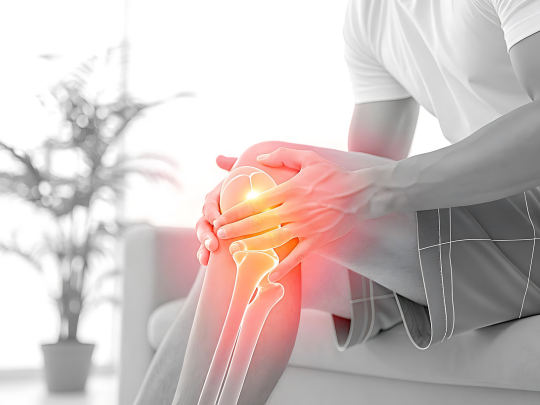
Knee osteoarthritis (knee OA) is the gradual breakdown of cartilage, joint lining, and supporting structures in the knee. As the joint wears, pain, swelling, stiffness, and loss of mobility can make everyday activities—walking, stairs, standing at work—feel harder than they should.
Many people are told to “wait until it’s bad enough” for joint replacement. NexGenEsis Healthcare offers non-surgical options that may help you stay active without rushing into major surgery.
Regenerative Knee Osteoarthritis Therapy at NexGenEsis Healthcare
Do you feel any of the following pain in your knee?
- Deep, aching pain in or around the knee joint, especially after activity.
- Stiffness getting up from a chair, out of the car, or first thing in the morning.
- Swelling or a feeling of fullness in the joint.
- Grinding, popping, or “crunching” sensations with movement.
- Pain walking longer distances or going up and down stairs.
Knee osteoarthritis often results from a combination of age, past injuries, excess load, and muscular imbalance. NexGenEsis Healthcare’s regenerative medicine for knee osteoarthritis uses biologic treatments plus mechanical strategies to calm inflammation, support joint structures, and improve how your knee handles load
CONVENTIONAL Vs. REGENERATIVE MEDICINE FOR KNEE OSTEOARTHRITIS RELIEF
Standard knee OA care often looks like:
- Over-the-counter pain relievers and anti-inflammatories.
- Corticosteroid injections.
- Basic physical therapy.
- Bracing and activity modification.
- Eventually, total or partial knee replacement when pain is severe enough.
While these can help in the short term, chronic medication use and repeated steroids are not a great long-term plan, and surgery is a major step with a lengthy recovery.
Our non-surgical knee OA approach focuses on:
- Regenerative joint injections (such as PRP, BMAC, and other biologics in appropriately selected patients) to help support cartilage, reduce inflammation, and improve joint environment.
- Structured strength and movement work to better align forces across the knee and offload damaged compartments.
- Weight and load management strategies to reduce mechanical stress on the joint.
- Office-based, minimally invasive options when appropriate.
- Joint-preserving strategy: Aim to support your native knee rather than jumping straight to replacement.
- Reduced reliance on long-term NSAIDs and narcotics.
- Focus on everyday function: Walking, stairs, work, and hobbies with less pain.
If you’ve been told your knees are “bone on bone” and replacement is your only option, you may still have non-surgical choices worth exploring. Call us today to schedule a consultation and get a clear, personalized plan to address your Knee Osteoarthritis.