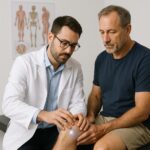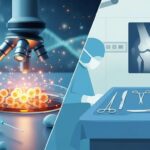
Regenerative medicine is changing how we treat chronic pain — offering targeted, non-surgical options that help people move better and feel better. Below, we explain how these therapies work, who they help, and what to expect when you explore treatment with NexGenEsis Healthcare in Columbus, OH. If pain is keeping you from the life you want, regenerative approaches can address the source of discomfort and support lasting improvement.
Regenerative medicine focuses on restoring damaged tissues and resetting the body’s natural healing pathways. Instead of only masking symptoms, these treatments encourage tissue repair and reduce inflammation – two key steps in easing chronic pain and improving function.
These therapies use biologic components — like stem cells, growth factors, and other regenerative materials — to jump-start the body’s repair systems. Stem cells can develop into the cell types needed to rebuild damaged tissue, while growth factors and scaffolds guide and accelerate healing. The result is not just less pain, but often better joint or tendon function so you can return to everyday activities.
Recent research also shows that advanced biomaterials can make regenerative treatments more effective by improving how healing agents reach and remain at the injured site.
These advantages make regenerative care an appealing option for people seeking effective, less-invasive pain management.
At NexGenEsis Healthcare, we provide a suite of regenerative therapies tailored to each patient’s condition and goals. Our team builds personalized plans that prioritize safety, clarity, and measurable improvement.
Platelet-Rich Plasma (PRP) therapy uses a small sample of your own blood, concentrates the platelets and growth factors, and injects that concentrate into the injured area. The growth factors stimulate tissue repair and reduce inflammation, often easing tendon and joint pain while improving function over time.
Stem cell therapy can offer several clinical benefits for degenerative joint conditions:
Together, these points highlight stem cell therapy as a promising option within a broader, conservative care plan.
A2M (Alpha-2-Macroglobulin) injections and shockwave therapy are complementary approaches: A2M helps block enzymes that break down cartilage and calms inflammation, while shockwave therapy applies acoustic energy to stimulate blood flow and tissue regeneration. Both aim to protect tissue and accelerate healing without surgery.
Alpha-2-Macroglobulin (A2M) is a natural protein that binds and neutralizes destructive enzymes tied to cartilage breakdown. By limiting enzyme activity and local inflammation, A2M can help preserve cartilage integrity and reduce joint pain over time.
Clinical studies support A2M as a promising, non-operative strategy for slowing cartilage degeneration and addressing osteoarthritis-related inflammation.
Shockwave therapy delivers focused acoustic waves to injured tissue, increasing circulation, reducing chronic inflammation, and encouraging cell repair. Many patients notice decreased pain and improved mobility after a short course of sessions.
Regenerative therapies are used for a range of musculoskeletal conditions, offering patients non-surgical pathways to reduce pain and restore function.
Treatments like PRP and stem cell therapy are increasingly applied to knee osteoarthritis and related joint pain. These therapies aim to reduce inflammation and support tissue healing, with many patients reporting lower pain and better mobility — though individual results will vary.
For shoulder, back, and hip conditions, common regenerative options include:
These treatments can be combined with rehabilitation and lifestyle measures to improve outcomes.
Specifically, evidence is growing that PRP and mesenchymal stem cell preparations can reduce inflammation and influence degenerative pathways in persistent spinal pain syndromes.
NexGenEsis Healthcare combines advanced regenerative options with individualized care. Our clinicians work directly with you to create a treatment plan that reflects your health history, goals, and lifestyle — so care is both effective and practical.
We pair evidence-informed therapies with clear communication and ongoing follow-up. That means targeted treatments delivered with safety-minded protocols, plus the support you need to track progress and adapt care as you recover.
Patient stories consistently report reduced pain, improved activity levels, and a better quality of life after regenerative care. These real-world outcomes illustrate how personalized, non-surgical approaches can offer meaningful, lasting relief for many people.
Your journey starts with a thorough consultation and continues with tailored treatment, follow-up checks, and rehabilitation guidance — all designed to help you safely return to the activities you value.
We build each plan from a complete review of your medical history, imaging (when available), physical exam, and your personal recovery goals. Together we discuss options, timelines, and realistic expectations so you understand the pathway forward.
Recovery varies by therapy. Most patients return to light activity quickly, with scheduled follow-ups to measure pain, function, and healing progress. We adjust care as needed to maximize results and keep you informed throughout recovery.
This table summarizes the regenerative options available at NexGenEsis Healthcare and the primary benefits each therapy can offer in managing pain.
Regenerative medicine represents a patient-focused alternative to more invasive care, offering non-surgical strategies that address the causes of pain and support true healing. NexGenEsis Healthcare in Columbus, OH provides individualized regenerative treatments designed to help you move with less pain and greater confidence.
Treatment length depends on the condition and the therapy chosen. Initial visits often take 30–60 minutes, and some treatments require a short series of sessions spaced weeks apart. Patients may notice early improvement within a few weeks, while the full regenerative effect can take several months as tissue remodels. Your provider will give a personalized timeline based on your plan.
Most regenerative procedures are well tolerated. Common short-term effects include mild swelling, bruising, or soreness at the injection site that typically resolves in a few days. Serious complications are uncommon, but you should review risks and post-procedure instructions with your clinician before treatment.
Candidacy is determined during a clinical evaluation that considers your medical history, imaging, symptom severity, and prior treatments. Regenerative options are often appropriate for patients seeking non-surgical care or those who have not had relief from conventional treatments. A consultation will clarify whether these therapies are right for you.
Yes. Regenerative therapies are frequently combined with physical therapy, medications, and lifestyle interventions to optimize recovery. Inform your provider about all current treatments so we can coordinate care safely and effectively.
Healthy habits support healing: a balanced, anti-inflammatory diet, adequate hydration, regular low-impact exercise, and avoiding tobacco and excessive alcohol. Your care team will recommend specific activity and nutrition guidance tailored to your recovery plan.
Progress is tracked through follow-up visits, functional assessments, and patient-reported outcomes. Keeping a simple journal of pain levels, activity tolerance, and milestones can help your clinician fine-tune treatment and measure improvement over time.
Regenerative medicine offers practical, evidence-informed ways to reduce pain and restore function without surgery. Treatments like PRP, stem cell therapy, A2M, and shockwave therapy can be part of a personalized plan to help you move better and feel better. At NexGenEsis Healthcare, we focus on clear communication, tailored care, and measurable results — so you can take the first confident step toward a more active, pain-managed life.
Real stories of recovery and renewed activity. See why patients trust NexGenEsis Healthcare for their regenerative medicine journey in Columbus, OH.