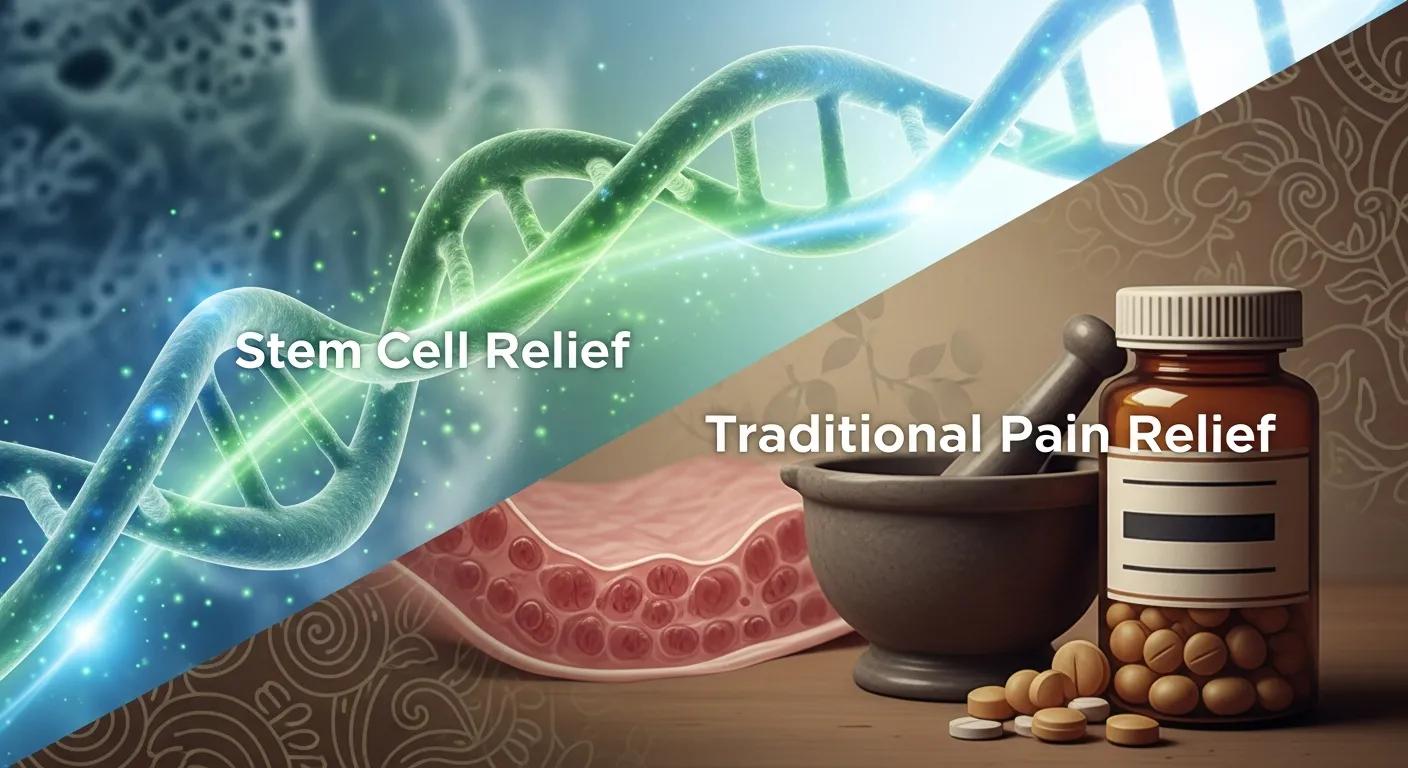
Chronic joint and musculoskeletal pain interferes with daily life, sleep and long-term mobility. Many patients must decide between traditional symptom-focused care and regenerative treatments that aim to repair tissue. This article lays out how stem cell and related regenerative therapies work, compares them to medications, corticosteroid injections and surgery, and gives a practical framework to help you choose the best option for your situation. You’ll learn the basic mechanisms behind stem cell treatments, the common regenerative options, the limits of traditional pain relief, and clear comparisons of invasiveness, recovery, risks, durability and cost.
We use current research and clinical reasoning to clarify who is most likely to benefit—for conditions like osteoarthritis, tendon injuries, neuropathy and sports injuries—and explain how personalized regenerative plans are built and integrated into long-term care at a local clinic. Book a call today with our expert stem cell doctor!
Don’t let chronic pain dictate your life. Discover how personalized regenerative treatments can offer a path to repair and improved function. Schedule a consultation today to discuss your unique situation.
Stem cell therapy is a branch of regenerative medicine that uses living cells or cell-derived factors to reduce inflammation and support tissue repair in injured joints, tendons or nerves. Practically speaking, mesenchymal stem cells and related biologics work mainly through paracrine signaling—releasing growth factors and cytokines—that tune immune activity and encourage the body’s own repair processes rather than simply masking symptoms. That cascade can lower pain and improve function for many patients by supporting extracellular matrix maintenance and, in some cases, partial cartilage or tendon remodeling. Knowing the different therapy types helps align the biological effect with the condition being treated and sets realistic expectations for recovery and how long benefits may last. The sections below summarize common stem cell sources and how they translate into clinical outcomes.
In regenerative orthopedics and pain management, the primary stem-cell–based approaches include Mesenchymal Stem Cell (MSC) Therapy, Umbilical Cord Stem Cell Therapy, and Bone Marrow Aspirate Concentrate (BMAC). MSCs—sourced from adult tissues or cultured preparations—are valued for their immunomodulatory and trophic-factor activity. Umbilical cord–derived cells are allogeneic, offering a higher concentration of primitive signaling cells in an off-the-shelf format, while BMAC is an autologous option obtained by bone marrow aspiration that delivers stem/progenitor cells alongside native growth factors. These sources differ in harvest invasiveness, preparation time and regulatory context, so the right choice depends on clinical goals and patient-specific factors. The quick list below highlights the core distinctions.
This summary frames the trade-offs clinicians consider when recommending a specific stem cell approach and prepares you to understand likely functional outcomes.
Recent studies emphasize the reparative potential and favorable safety profile of mesenchymal stem cells for conditions such as osteoarthritis.
Stem cell therapy supports repair mainly by releasing growth factors and anti-inflammatory mediators that orchestrate the body’s healing, rather than by directly replacing large volumes of damaged tissue. Treated cells secrete proteins that recruit native repair cells, dampen harmful inflammation, and stimulate collagen and proteoglycan production within cartilage and tendon matrices. Clinically, this often shows up as a gradual reduction in pain and improved function over weeks to months as the tissue environment shifts from breakdown to repair. Injection-based regenerative procedures have generally favorable safety profiles—short-term soreness or localized swelling is common, while serious complications are rare when care is performed by experienced clinicians. Knowing this mechanism helps set realistic expectations: benefits typically build over time and are maximized when combined with rehabilitation.
The multipotent and immunomodulatory properties of mesenchymal stem cells make them a promising option for degenerative joint conditions.
Traditional pain relief methods include systemic medications, corticosteroid injections, physical therapy and, when necessary, surgery. These treatments largely reduce pain, control inflammation or replace damaged structures rather than restore native tissue. Drugs such as NSAIDs and opioids act on symptom pathways—prostaglandin production or central pain perception—providing prompt relief but not regeneration, and they come with risks like gastrointestinal, cardiovascular or dependency issues with long-term use. Corticosteroid injections deliver potent local anti-inflammatory effects useful for short-term control, yet repeated steroid use can weaken tendons or cartilage and often needs frequent repeats. Surgery, including joint replacement, is invasive but can correct structure and give durable pain relief; it also involves longer recovery, perioperative risk and possible future revisions. The sections below go into medication/injection strategies and surgical trade-offs in more detail.
Medications and corticosteroid injections reduce pain through targeted biochemical actions: NSAIDs block cyclooxygenase enzymes to lower prostaglandin-driven inflammation, opioids alter central pain signaling, and corticosteroids blunt broad inflammatory cascades at the injection site. These approaches work well for rapid symptom control and are commonly used to enable rehabilitation or to buy time while evaluating longer-term options. That said, relief is often time-limited and may require repeat dosing—corticosteroid injections commonly yield weeks to a few months of benefit depending on the condition. Side effects range from GI irritation and cardiovascular concerns with NSAIDs to hormone-related and tissue-catabolic effects with steroids, so clinicians carefully consider frequency and cumulative exposure when recommending repeat treatments. The next section reviews when surgery becomes the preferred option and what recovery typically involves.
Although corticosteroids provide strong short-term relief, their effects on regenerative cell populations deserve careful consideration.
Surgical options—ranging from arthroscopic repairs to joint replacement—are appropriate when structural damage, deformity or advanced degeneration make conservative care insufficient. Surgery aims to restore anatomy or replace worn surfaces for long-term pain relief. Recovery varies: arthroscopic procedures may take weeks to months of progressive rehab, while joint replacement often requires several months to regain full strength and range of motion. Surgical risks include infection, blood clots, anesthesia complications and the possibility of future revision surgery, which raises cumulative lifetime risk. Despite these factors, surgery remains the standard for advanced structural disease where regenerative or conservative measures are unlikely to restore function; decisions should consider age, activity goals and other medical issues.
Comparing regenerative therapies with traditional options means weighing invasiveness, expected duration of benefit, underlying mechanism (repair versus symptom control) and overall safety—because each path balances different priorities. Regenerative injections such as MSCs, PRP and related biologics are minimally invasive outpatient procedures that aim to modulate tissue and potentially provide longer-lasting benefit, while steroid injections and systemic medications mainly suppress symptoms and often require ongoing use. Surgery delivers mechanical correction with predictable structural outcomes but at the cost of greater invasiveness and recovery. Recent studies and meta-analyses suggest many regenerative options can produce sustained pain relief and functional gains for selected patients, though evidence quality varies by condition and protocol—so individualized evaluation remains essential. The table below offers a side-by-side view of key attributes to aid decision-making.
This table summarizes core differences between regenerative and traditional approaches:
This comparison shows regenerative approaches often fall between conservative injections and surgery: less invasive than an operation but potentially offering longer-lasting results than steroids when used appropriately. Below we explore efficacy and recovery differences in more depth.
Evidence indicates regenerative treatments—especially MSC therapy and PRP—can reduce pain and improve function for early-to-moderate osteoarthritis and certain tendon injuries, with many studies reporting meaningful outcome improvements. Corticosteroid injections tend to give consistent short-term relief but often lose effect with repeated use, while surgery provides durable mechanical correction when structural destruction requires replacement or repair. Limitations in the regenerative literature include variable protocols, differing cell preparations and inconsistent outcome measures, so clinicians stress realistic expectations and shared decision-making. Patients should know regenerative benefits usually develop over months and may delay or reduce the need for surgery rather than guarantee avoidance of future procedures.
These differences guide patient selection and timing: minimally invasive regenerative options suit those seeking tissue-focused repair with lower short-term risk, while surgery remains necessary when structural restoration or replacement is required.
Musculoskeletal and neuropathic conditions respond differently to regenerative and traditional care; candidate selection depends on disease stage, goals and comorbidities. Early-to-moderate knee and hip osteoarthritis often shows measurable pain and function gains with MSC or PRP injections, whereas severe, end-stage joint damage typically calls for replacement. Tendonitis and partial tears can respond well to PRP or stem-cell–enhanced protocols that promote collagen remodeling, while complete ruptures may still need surgical repair. Peripheral neuropathy and focal nerve injuries have emerging regenerative evidence suggesting symptom improvement and partial functional recovery for select patients, but results vary and are best combined with rehabilitation. The table below maps common conditions to recommended regenerative and traditional options and expected outcomes.
This table maps conditions to regenerative vs traditional choices:
In osteoarthritis, stem cell therapies—particularly MSC-based and BMAC approaches—have shown consistent reductions in pain scores and improved function in multiple clinical series and meta-analyses, with many patients experiencing benefits that last months to years. Outcomes depend on baseline severity: those with early-to-moderate cartilage loss and good alignment tend to see the best results, while advanced bone-on-bone disease often has limited regenerative potential and may be better served by joint replacement. Realistic expectations emphasize gradual improvement over weeks to months and the importance of pairing biologic treatments with physical therapy and weight management to maximize gains. Shared decision-making helps determine whether pursuing regenerative therapy before surgery makes sense for an individual patient.
Regenerative approaches—including stem cell injections, PRP and shockwave therapy—are increasingly used for peripheral nerve injuries and sports-related tendon or ligament problems to stimulate neurotrophic and reparative activity or speed tendon remodeling. Athlete-focused protocols commonly combine biologic injections with structured rehabilitation to rebuild load tolerance and function; case series often report faster return-to-play and reduced chronic tendinopathy. For nerve injuries, regenerative treatments can promote a pro-repair environment that helps symptom relief and partial functional recovery in selected cases, though outcomes are variable and typically require adjunct therapies like PT and neuropathic symptom management. Using these modalities as part of a multidisciplinary plan improves the chance of meaningful gains.
Regenerative procedures usually have higher upfront costs than a single corticosteroid injection or a short medication course because of biologic sourcing and cell processing. The long-term value comes from potentially avoiding repeated interventions, reducing medication dependence and delaying or preventing surgery. From a cost-effectiveness view, a regenerative protocol can lower cumulative costs over several years for patients who achieve durable relief and functional improvement—especially when factoring indirect savings like less time off work and reduced rehab after avoided surgery. Insurance coverage for regenerative procedures varies, so personalized cost estimates and financing options are important. The table below gives a simplified cost–benefit snapshot to help evaluation.
This table compares upfront cost and long-term considerations:
Stem cell therapy can be more cost-effective over several years when it meaningfully reduces repeat conservative treatments or postpones surgery that would carry higher total costs and time away from work. For example, a middle-aged patient with moderate knee osteoarthritis who delays joint replacement for years after effective MSC therapy may save on surgical and rehabilitation expenses while maintaining activity. Conversely, when degeneration is advanced and regenerative benefit is limited, earlier surgery may be the more economical choice. Key factors include baseline severity, patient goals, expected durability of benefit and local pricing.
Coverage is variable, so ask clear questions in your consultation to understand total expected costs, likely number of treatments and available financing or package options. Discuss anticipated follow-up, additional rehab expenses and realistic timelines for improvement so you can compare cumulative costs across options. Use this checklist to guide the financial conversation.
NexGenEsis Healthcare is a regenerative medicine clinic focused on personalized, minimally invasive alternatives for chronic joint pain, nerve injury, sports injuries and arthritis. We offer a suite of biologic and adjunctive therapies aimed at promoting natural healing and lasting relief—services that include Mesenchymal Stem Cell (MSC) Therapy, Umbilical Cord Stem Cell Therapy, Bone Marrow Aspirate Concentrate (BMAC), PRP Therapy, Shockwave Therapy (ESWT) and A2M (Alpha-2-Macroglobulin) injections. These treatments are combined into individualized plans that emphasize measurable functional outcomes. NexGenEsis frames these options as non-surgical, lower-risk strategies that may reduce long-term costs by delaying or avoiding surgery and decreasing medication reliance, and we tailor protocols to each patient’s condition and goals. For people in the Clearwater area, NexGenEsis delivers local expertise and coordinated care pathways that translate these clinical comparisons into personalized plans.
One example is A2M (Alpha-2-Macroglobulin) injections, which can neutralize catabolic enzymes that degrade cartilage and soft tissue—offering a targeted strategy for joint preservation and pain reduction in selected osteoarthritis cases and other degenerative conditions.
Our process starts with a thorough assessment—clinical exam and imaging review—to identify the best biologic or multimodal approach. From there we design a personalized protocol that may combine MSCs, PRP, ESWT and A2M injections as indicated. The pathway follows a clear sequence: evaluation → individualized protocol selection → image-guided procedure → structured follow-up and rehabilitation. That stepwise plan ensures we target the root causes of pain and monitor outcomes over time. We emphasize multimodal care—pairing biologics with physical therapy and functional goals that match each patient’s activity and recovery timeline—and provide candid counseling on timelines and realistic outcomes to support shared decision-making.
Patients treated at NexGenEsis frequently report reduced medication use, improved mobility and the return to activities they enjoy after tailored regenerative protocols. Many anonymized vignettes describe delayed or avoided surgery following successful regenerative treatment and measurable improvements in pain and activity scores over months. Prospective patients are invited to review case materials and discuss individual expectations during a consultation to see whether NexGenEsis’s personalized regenerative pathway fits their goals. Requesting a consultation is the next step toward a focused, individualized plan.
Stem cell therapy is generally well tolerated. Common, mild side effects include localized swelling, soreness at the injection site and short-lived inflammation. Serious complications are uncommon when treatments are performed by trained clinicians. Individual risk can vary with the cell source and the treated condition, so discuss specific risks with your provider.
Many patients notice gradual improvement in pain and function within weeks, with more meaningful gains over several months. Timelines depend on the condition, severity and treatment protocol. Combining regenerative therapy with rehabilitation typically improves outcomes. Set realistic expectations with your clinician about the recovery course.
Stem cell therapy shows promise for early-to-moderate osteoarthritis, tendonitis and certain sports injuries. Patients with these conditions often experience meaningful pain relief and functional gains, though effectiveness varies with disease stage and individual factors. A consultation helps determine if regenerative treatment is appropriate for your case.
Upfront costs for stem cell therapy are usually higher than a single steroid injection or a medication course, but the long-term value may come from reducing repeat interventions or delaying surgery. Consider overall value—improved quality of life and lower long-term healthcare costs—when evaluating options, and ask your provider about financing and coverage.
Yes. Stem cell therapy is often combined with physical therapy, PRP and shockwave therapy in a multimodal plan to address different aspects of healing and rehabilitation. A personalized strategy that integrates these treatments can enhance outcomes—work closely with your provider to develop the best plan for you.
Stem cell procedures are typically minimally invasive outpatient injections, often performed under imaging guidance for precision. The visit is usually brief; you may feel some discomfort during the injection and mild soreness afterward. Recovery is generally short, and your provider will give pre- and post-procedure instructions to support optimal healing.
Choosing between stem cell therapy and traditional pain-relief options can shape your long-term function and quality of life. Regenerative treatments offer a tissue-focused approach that may lead to lasting gains, while traditional methods remain important for symptom control and mechanical correction when needed. Understanding the benefits and limits of each path helps you make a decision tailored to your goals. To explore a personalized plan that fits your situation, schedule a consultation with our team today.
Our expert team is dedicated to helping you find the most effective, minimally invasive solutions. Contact us to learn more about how regenerative medicine can transform your health. Contact NexGenEsis Healthcare Clearwater for personalized guidance and a healing plan.